From wireframes to wow: The app design process
Designing an app that delights users requires more than just visual creativity. A well-structured process ensures usability, scalability, and brand alignment — and it's the difference between an app that merely functions and one that becomes a daily habit for its users. At Brandbusters, we follow a step-by-step approach that turns abstract ideas into successful, scalable digital products, and we want to walk you through exactly how that journey unfolds.
Step 1: Understanding the Product & Users
Before a single pixel is placed or a wireframe sketched, we slow down and ask the questions most teams rush past. Who is this app actually for? What problem does it solve, and how are people solving that problem today — with a competitor's app, a clunky spreadsheet, or simply by not solving it at all?
This discovery phase usually involves stakeholder interviews to understand business goals and constraints, light competitive analysis to see where similar products succeed or fall short, and conversations with real or prospective users to surface their habits, frustrations, and expectations. The output isn't a deck that gets filed away — it's a working foundation: defined personas, a clear value proposition, and a prioritized list of features that actually matter, instead of a wish list that tries to do everything at once.
Skipping this step is one of the most common reasons apps fail to gain traction, no matter how polished the final screens look. A beautiful interface built on the wrong assumptions is still the wrong interface.
Step 2: Wireframing & Prototyping
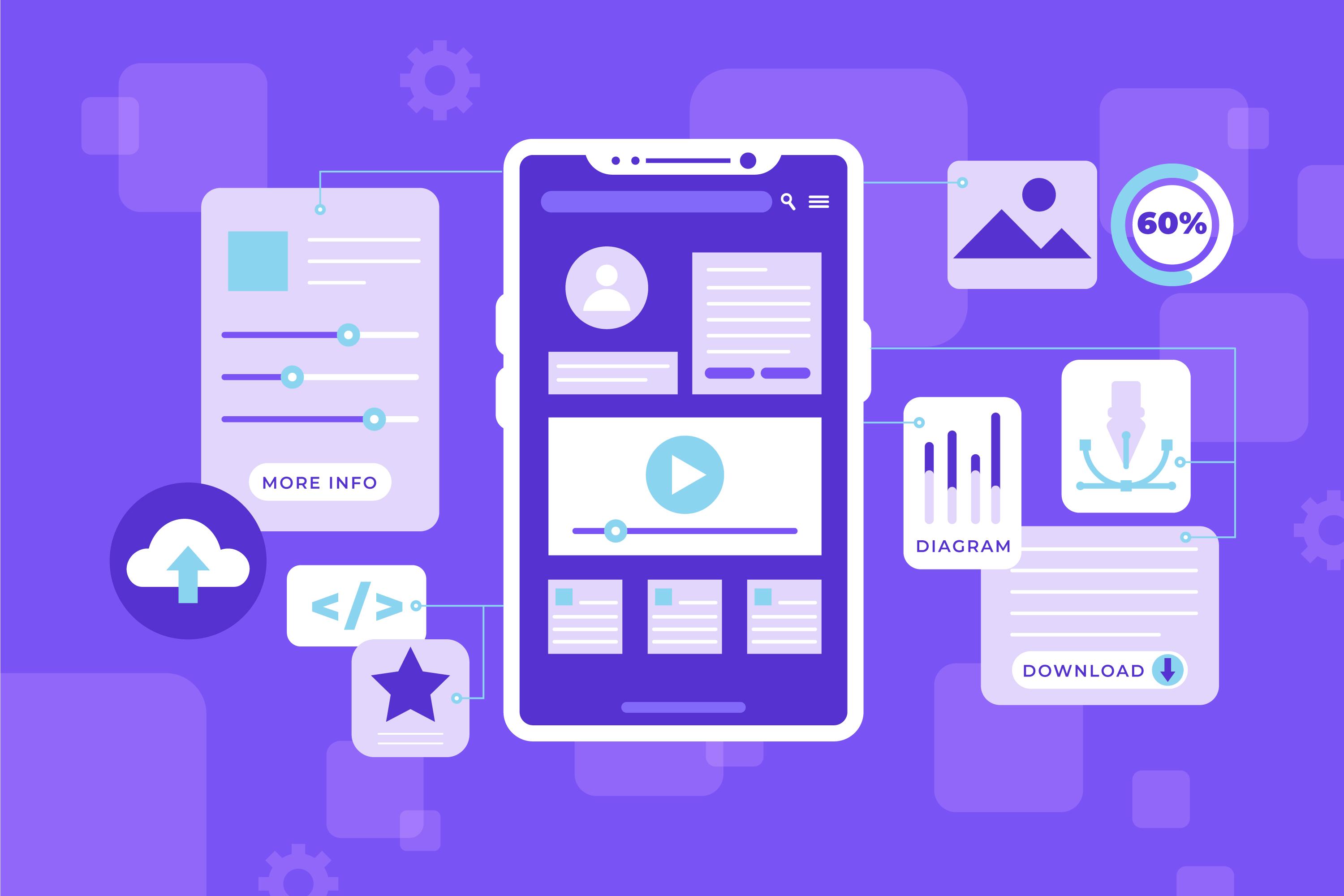
With a clear understanding of the problem, we move into structure. Wireframes are deliberately stripped of color, imagery, and branding — black-and-white boxes and labels that let everyone focus on one question: does this flow make sense? At this stage, moving a button costs minutes; making the same change after development has started can cost days.
We typically move from low-fidelity sketches, used to quickly explore multiple directions, to clickable mid- and high-fidelity prototypes that simulate real navigation. These prototypes let us test core user journeys — onboarding, checkout, search, whatever matters most for the product — before a single line of code is written. Watching a handful of real users try to complete a task in a prototype reveals more about a design's weak points than any internal review ever could, and it's far cheaper to fix a confusing flow now than after launch.
Step 3: Visual Design
Once the structure holds up, we bring it to life. This is where typography, color palettes, iconography, and imagery come together to express the brand's personality while keeping the interface clear and easy to scan. Every choice — the weight of a heading, the contrast of a button, the spacing between elements — is made with both aesthetics and usability in mind, because a design that looks striking but is hard to read or navigate isn't doing its job.
We also build a lightweight design system at this stage: reusable components, consistent spacing rules, and defined states (default, hover, error, loading) so the app feels cohesive across every screen, not just the ones that got the most attention. Accessibility is part of this conversation too — sufficient color contrast, legible font sizes, and clear touch targets aren't an afterthought, they're built in from the start.
Step 4: Iteration & Feedback
No design is right on the first attempt, and we don't expect it to be. We share work early and often with both clients and developers, and we actively look for friction — the screens that raise the most questions are usually the ones that need the most attention. Feedback happens on multiple levels: internal design reviews to catch inconsistencies, client check-ins to confirm the direction still matches business goals, and usability sessions with real users to validate that the experience actually works in practice.
This stage can feel slower than simply pushing forward, but it's where a good design becomes a great one. Each round of feedback narrows the gap between what we assume users will do and what they actually do — and that gap is exactly where most app failures hide.
Step 5: Handoff & Support
A great design that developers can't accurately build is, in practice, no design at all. We prepare final files in developer-ready formats — detailed style guides, exported assets at the right resolutions, and clearly documented spacing, color, and typography specs — so nothing gets lost in translation between design and code.
We stay involved through development too, answering questions as edge cases come up and reviewing builds against the original design to catch any drift before launch. And once the app is live, our involvement doesn't necessarily end there — many of our clients come back for updates, new features, or a redesign as their product and user base evolve.
Why the Process Matters
It would be faster, on paper, to skip straight to visual design — to open a design tool and start making things look good. But speed without structure tends to be a false economy: it produces apps that look impressive in a pitch deck and fall apart the moment real users start clicking around. A structured process doesn't slow creativity down; it gives creativity somewhere solid to stand. Every visual decision we make later is backed by research, validated by testing, and built to scale, which is exactly why the apps that come out the other end tend to hold up long after launch day.
Conclusion
From the first user interview to the final handoff, a structured design process ensures that every element of an app serves a purpose — solving a real problem, for a real person, in a way that reflects the brand behind it. It's not a formula that guarantees success on its own, but it removes the guesswork that sinks so many good ideas before they ever reach users.
Partnering with a professional design studio like Brandbusters means your app isn't shaped by trends or guesswork, but by a deliberate process — one that turns wireframes into an experience people actually want to use.